Residential Glass Services
Patio & Sliding Door Glass
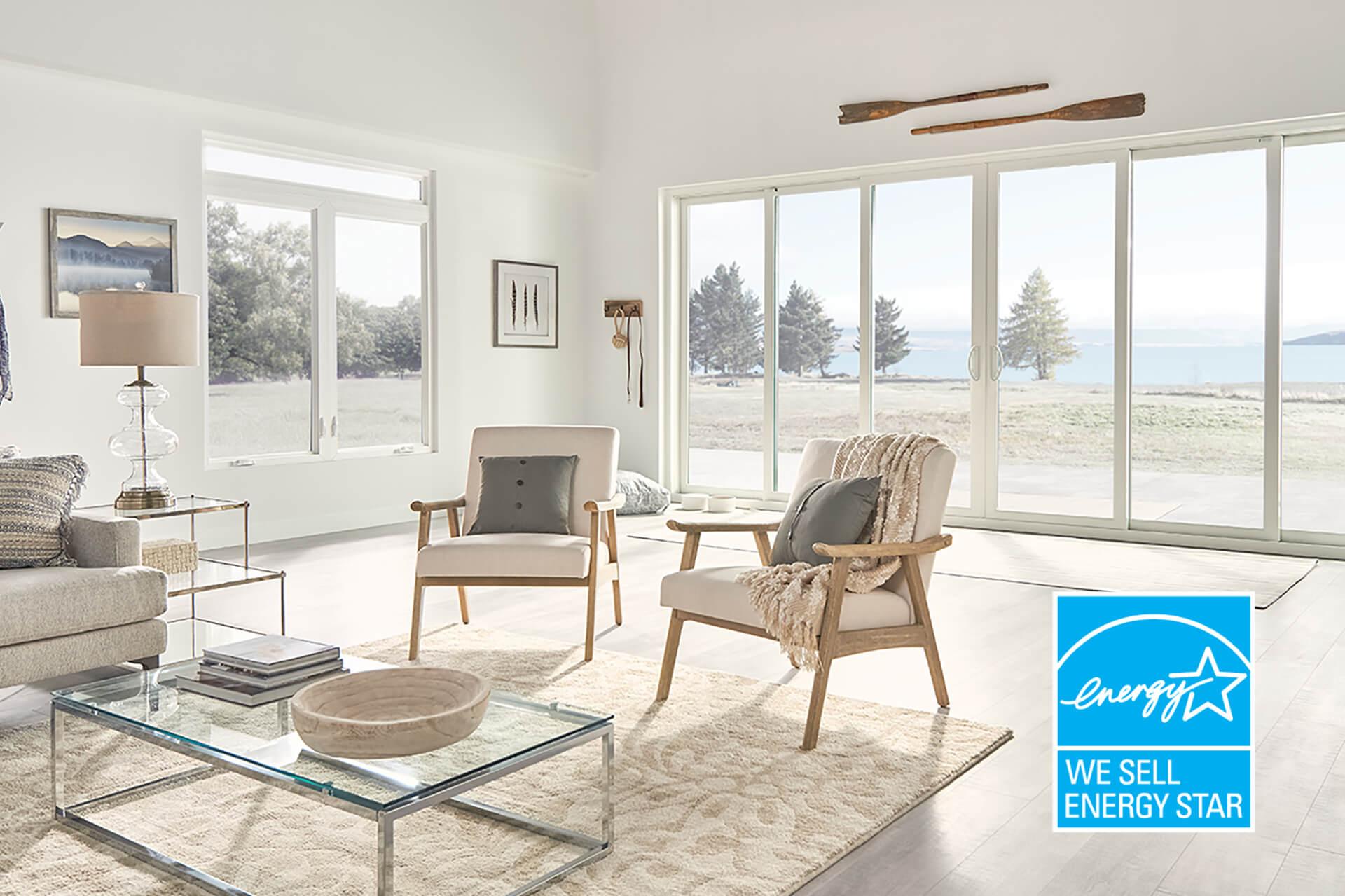
Patio and sliding doors take a beating — year-round exposure, repeated operation, and the physics of a large glass panel under thermal and wind stress. When the glass cracks, chips, fogs, or shatters, Nu-Glass & Storefronts replaces it with the correct tempered, insulated units for your door type. Family-owned and Newburgh-based since 1989, serving Orange, Ulster, and Dutchess Counties, with owner Rick Powles on every job.
What We Do
- ✓ Sliding (bypass) patio door glass — tempered insulated units for all standard track systems
- ✓ Swinging patio door glass — French door panels and single-lite swinging doors
- ✓ Tempered safety glass — required by code in patio doors; we never substitute
- ✓ Insulated glass upgrade — replacing single-pane patio door glass with energy-efficient units
- ✓ Roller and track service — adjusting sliders that drag or jump the track
- ✓ Screen repair — replacing torn or damaged patio door screens
Why patio door glass must be tempered — and what happens when it isn't
Every patio door in a residential building — sliding or swinging, inside or outside — is required by building code to have tempered safety glass. This isn't a suggestion or a best practice; it's a mandatory requirement under the International Residential Code and the New York State Building Code, which classify patio doors as a "hazardous location" for glazing.
The reason is physics: a patio door is a large panel of glass in a location where people are moving through frequently, where temperature differentials can stress the glass, and where impact is more likely than in a fixed window. Standard float glass, if it breaks in this location, shatters into large, razor-sharp shards that can cause severe lacerations. Tempered glass, under the same impact, shatters into small, blunt pieces that are far less likely to cause serious injury.
When we replace patio door glass, we always use tempered glass — or, where the door also qualifies as an insulated unit, tempered-insulated glass. The glass carries the required CPSC 16 CFR 1201 certification mark etched into a corner of the panel. If your existing patio door glass is standard float glass — no certification mark — and it breaks, that's an indication it may not have been installed correctly to begin with. We replace it with the correct tempered unit.
Sliding patio door glass: how the replacement works
A sliding patio door glass panel is captured in a sash frame — typically aluminum, vinyl, or wood — that runs on rollers along a bottom track and is guided at the top by a channel. To replace the glass, the panel has to come out of the door frame.
The process: we lift the panel out of the track (sliding panels are designed to be removable for exactly this reason), remove the glazing stops or gaskets that hold the glass in the sash frame, carefully remove the broken glass, and then install the new panel — setting it on rubber setting blocks, reinstalling the stops or gaskets, and verifying the seal around the perimeter. The panel then goes back in the track, the rollers are adjusted for proper glide, and the door is tested for smooth operation.
Most standard sliding patio door glass panels are 76″ to 96″ tall and 34″ to 46″ wide — heavy pieces that require two people to handle safely. We bring the right equipment and crew for every patio door glass job. The replacement glass itself is made to order because door panel dimensions aren't standardized — the exact size depends on the door manufacturer and model. We measure the daylight opening in the sash and fabricate to that specification.
Swinging patio doors (French doors): the glass difference
Swinging patio doors — commonly called French doors — have hinged panels rather than sliding ones. Each panel is a door that swings independently, typically with a pair of panels that meet in the center. The glass in a French door patio panel is typically a single tempered lite or an insulated tempered unit, retained in a wood, fiberglass, or aluminum sash with glazing stops.
French door glass replacement is similar in process to a sliding door but often simpler to access — you can typically replace the glass without removing the door from its hinges, by working from the stops on the interior face. The glass configuration is also simpler in most cases: a single large lite per panel rather than a sliding sash assembly.
The challenge with French doors is matching the existing glass in multi-door configurations. If you have a pair of French doors and only one panel breaks, the replacement glass needs to match the surviving panel in tint and coating — a mismatch in reflectance or tint looks off, particularly in natural light. We identify the specification of the surviving glass and source a matching replacement. We also address the insulated-glass version of this problem: if one panel has gone foggy while the other is clear, we replace the failed IGU and work to match the appearance of the clear panel.
Insulated vs. single-pane patio door glass: the energy and comfort difference
Older patio doors — particularly sliding doors installed in the 1980s and 1990s — often have single-pane tempered glass. This was acceptable at the time but represents a significant thermal weak point in a modern, well-insulated home. Single-pane glass has an R-value of roughly 1; a quality insulated glass unit (IGU) has an effective R-value of 2–3, and with a Low-E coating, it can approach R-4 or better.
In practical terms: a single-pane patio door is cold to the touch in winter and creates a significant temperature differential at the glass surface that feels uncomfortable to sit near. It also allows significant solar heat gain in summer, which contributes to cooling load in a south- or west-facing installation.
When a single-pane patio door glass breaks, replacing it is an opportunity to upgrade to an insulated tempered unit at a cost difference that's meaningful but not enormous — and the energy savings and comfort improvement are immediate and ongoing. We'll quote both options (single-pane like-for-like and insulated upgrade) so you can make the decision with full information. The upgrade makes sense on almost every Hudson Valley home given our climate.
When the door is hard to slide — roller and track service
A sliding patio door that's difficult to open or close, that jumps off the track, or that drags and grinds is usually not a glass problem — it's a roller or track problem. But since we're often called to replace the glass, we assess the roller and track condition as part of every patio door job and address what we find.
The most common sliding patio door mechanical problems:
Worn rollers. The rollers at the bottom of the sliding panel are plastic or metal wheels that ride on the track. They wear out over years of use, developing flat spots or cracking. A worn roller makes the door hard to slide and may cause it to wobble or jump. Roller replacement is inexpensive and dramatically improves door operation.
Dirty or damaged track. Debris, pet hair, dirt, and oxidation accumulate in the bottom track over time and create resistance. A thorough cleaning of the track, followed by a light lubrication (silicone spray, not WD-40 which attracts more dirt), often resolves sliding difficulty without any parts replacement.
Out-of-adjustment rollers. Most sliding patio door rollers have a height adjustment screw that controls how high the panel sits in the track. If the rollers are set too low, the panel drags on the track. Too high and it can jump. We adjust to the correct height for smooth operation. Part of our full residential glass services in the Hudson Valley.
What patio door glass replacement costs — and what affects it
Patio door glass replacement has more variables than a standard window because of the size of the panels, the required glass type (always tempered or tempered-insulated), and whether you're upgrading from single to double-pane. Here's what affects the price:
Panel size. Larger panels use more glass and are more labor-intensive to handle safely. A standard 76″ × 34″ sliding door panel is a different job from a 96″ × 48″ panel — both in glass cost and handling requirements.
Single-pane vs. insulated. A tempered-insulated replacement unit costs more than a single-pane tempered replacement, but the thermal improvement is significant and the cost difference is a fraction of what a full patio door replacement would run.
Lead time. Patio door glass is made to order. Typical fabrication is one to three weeks. We'll board the opening if the door is non-functional while the glass is being fabricated.
We give you an exact price after measuring — not a range. Call us at (845) 562-8387 to schedule a measurement. For window glass repair on other windows in the same home, see our window glass repair page. For foggy insulated units in any window or door, see insulated glass unit replacement.
Written & verified by
Rick Powles
Owner & Operator, Nu-Glass & Storefronts, Inc.
Rick Powles has measured, fabricated, and installed commercial glass and glazing systems across the Hudson Valley since 1989. As owner-operator, he is on every job — storefronts, curtain wall, frameless showers, and everything in between.
FAQs
Frequently asked questions
-
Is patio door glass required to be tempered?
Yes — both sliding and swinging patio doors must have tempered safety glass by code. We always replace patio door glass with the correct certified tempered or tempered-insulated unit. Never standard float glass.
-
My sliding patio door is hard to open — do I need new glass?
Probably not. Difficult sliding is almost always a roller or track issue, not a glass problem. We assess the rollers and track as part of every patio door job and address what we find — often a roller replacement and track cleaning is all it takes.
-
Can you upgrade my single-pane patio door glass to insulated?
Yes — when you're replacing a single-pane panel, upgrading to a tempered-insulated unit is very achievable and usually the right call for Hudson Valley homes. We quote both options so you can decide with full information.
-
How long does patio door glass replacement take?
The glass is made to order and typically takes one to three weeks to fabricate. The on-site installation — removing the panel, swapping the glass, reinstalling, and adjusting — is usually a half-day to full-day job depending on the door configuration.
-
Do you replace French door glass as well as sliding doors?
Yes — we replace glass in swinging French door panels, single-panel swinging patio doors, and all sliding configurations. The process differs slightly by door type but the result is the same: correctly specified, properly installed patio door glass.
Get Started
Need patio & sliding door glass?
Call the shop or request a free estimate — we'll measure, quote, and get it done right.