Residential Glass Services
Insulated (Foggy) Glass Unit Replacement
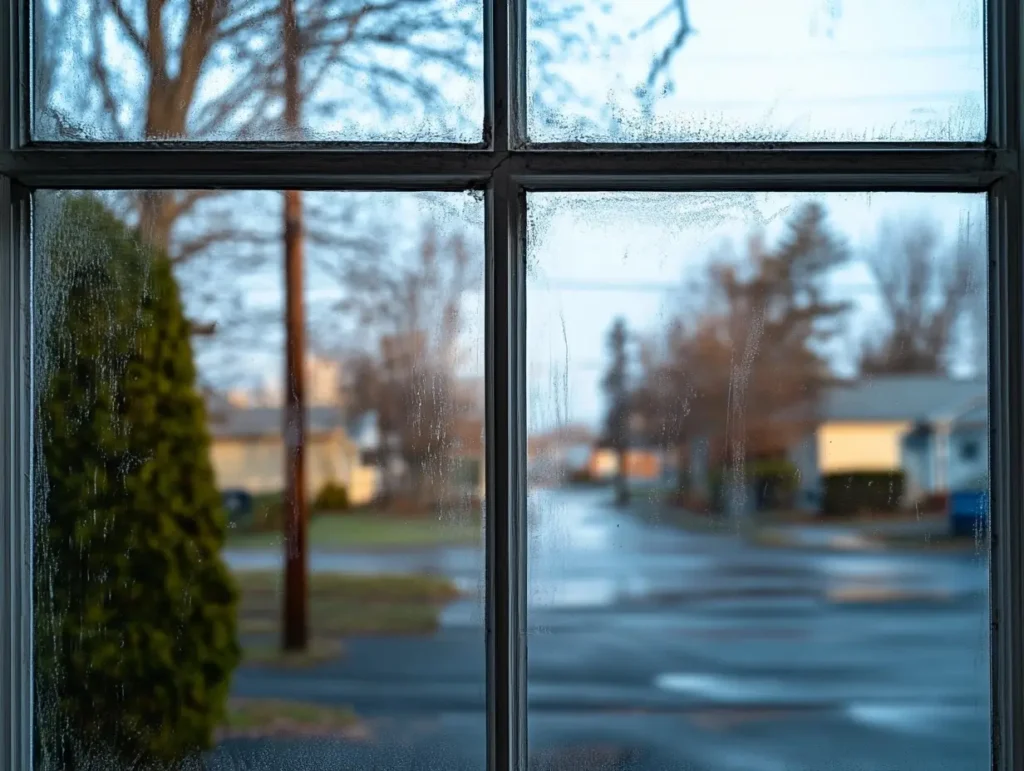
When your double-pane window goes foggy or hazy between the panes, the sealed insulated glass unit has failed — and no amount of cleaning fixes it because the moisture is inside the sealed unit. The good news: you don't need a whole new window. Nu-Glass & Storefronts replaces just the glass unit in your existing frame, restoring clarity and thermal performance at a fraction of the cost. Family-owned and Newburgh-based since 1989, serving Orange, Ulster, and Dutchess Counties.
What We Do
- ✓ Insulated glass unit (IGU) replacement — foggy, failed-seal units in any residential window frame
- ✓ Low-E glass upgrade — better heat control and UV protection when you're already replacing
- ✓ Argon-filled units — restoring the thermal gas fill for full insulation performance
- ✓ Tempered IGUs — for windows in hazardous locations where safety glazing is required
- ✓ Single-pane to double-pane conversion — upgrading older windows for better energy efficiency
- ✓ Matching existing glass — tint, coating, and appearance matched across multiple units
Why your window fogs up — and why you can't clean it off
An insulated glass unit is a precisely engineered assembly: two lites of glass separated by a metal or foam spacer, with a sealed, usually argon-filled gap between them. Around the perimeter of that gap, a two-part sealant system — desiccant-filled primary seal at the spacer, silicone secondary seal at the edge — keeps air and moisture out of the cavity.
Over time, that perimeter seal weakens. Thermal cycling — the daily and seasonal expansion and contraction of the glass and spacer system as temperatures change — stresses the seal gradually. The spacer may oxidize. The silicone secondary seal may crack. Eventually, air and moisture enter the gap. The desiccant in the spacer absorbs moisture initially, but once it's saturated, visible moisture appears as fogging, haziness, or the crystal-deposit pattern you sometimes see on older failed units.
The reason you can't clean it off: the fog is inside the sealed unit, between the two panes. It's not on the glass surface — it's in the sealed cavity. The only fix is replacing the entire glass unit. There are products marketed as "defoggers" that claim to remove the moisture without replacing the glass — they involve drilling into the unit and applying a chemical treatment. In our experience, the results are temporary and inconsistent, and they don't restore the argon fill or the thermal performance of the original unit. We don't offer that service and don't recommend it. The right repair is replacing the glass unit.
What actually gets replaced — and what stays
The most important thing to understand about IGU replacement is what's being replaced and what's not. Here's the breakdown:
What comes out: The sealed glass unit itself — the two lites of glass, the spacer, and the dried-out or failed sealant. This is the failed component, and it's what we remove.
What stays: The window frame, the sash (the operable part of the window that holds the glass), and all the hardware — latches, handles, balances, and weather stripping. These are typically in good condition and don't need replacing.
The sash is designed to accept a glass unit of a specific thickness. We measure the existing unit's thickness and the rabbet (the groove in the sash that holds the glass) to specify the replacement unit. The replacement goes in, sealed with new glazing tape and, where appropriate, setting blocks to support the weight. The result is a window that looks and performs like a new window — without replacing the frame.
The exception is a sash that's structurally damaged — warped, rotted, or cracked so badly that it can't hold a new unit correctly. In that case we'll tell you honestly that the sash (or the full window) needs replacement, not just the glass. We don't do a glass-only repair when the sash is the actual problem.
Low-E glass: should you upgrade when you're already replacing?
When you're replacing a failed IGU, you have a choice: replace it with the same type of glass that was in the window, or upgrade to a Low-E unit. This is one of the most common questions we get on IGU replacement jobs, and the honest answer is: usually yes, upgrade.
Low-emissivity (Low-E) glass has a microscopically thin metallic oxide coating on one of the interior glass surfaces. The coating reflects radiant heat — infrared radiation — while allowing visible light through. In a Hudson Valley home, this means two things: less heat loss through the window glass in winter (the coating reflects interior heat back in), and less solar heat gain through south- and west-facing windows in summer (the coating reflects some of the sun's radiant energy back out).
The practical result is lower heating and cooling bills, more comfortable spaces near the glass in both summer and winter, and less UV fading of furniture, flooring, and window treatments. Studies by the Department of Energy suggest Low-E windows can reduce energy loss through windows by 30–50% compared to clear glass, depending on climate and orientation.
The cost difference between a clear-glass replacement IGU and a Low-E IGU of the same size is real but modest — and you're already paying the labor cost to remove and install. The incremental upgrade cost has a payback period of a few years in energy savings for most Hudson Valley homes, and the comfort benefit is immediate. We quote both options and give you the price difference so you can make an informed decision.
Argon fill, spacers, and what actually matters for performance
Not all replacement IGUs are the same. Here's what the specifications mean for performance — and what to ask about when you're getting quotes:
Argon fill. The gas between the panes in a quality IGU is argon, which conducts heat about 34% more slowly than air. This improves the center-of-glass U-value (the measure of heat transfer through the glass) compared to an air-filled unit. Most replacement IGUs we install are argon-filled as standard. Units filled with air are slightly less expensive but perform measurably worse — in a Hudson Valley climate, we recommend argon.
Spacer type. The spacer separates the two glass lites and holds the sealed cavity. Aluminum spacers are common and economical but thermally conductive — they create a "cold edge" at the perimeter of the window where heat loss is concentrated. Warm-edge spacers (structural foam, stainless steel with a thermal break, or hybrid spacers) significantly reduce that edge conductance. The improvement is most noticeable in cold weather, when the edge zone of an aluminum-spaced window can show condensation before the rest of the glass does.
Number of panes. Standard residential replacement IGUs are double-pane. Triple-pane units are available and improve performance further, but the cost is higher and the weight may exceed what some sash systems can support. For most Hudson Valley residential applications, a quality double-pane unit with Low-E and argon is the right specification. See our window glass repair page for the broader context of residential glass work.
How to know if your window frame can accept a new glass unit
IGU replacement requires that the sash and frame be in good enough condition to hold the new unit correctly. Here's what we look at when we assess a failed IGU:
Sash condition. Wood sashes can rot — particularly at the bottom corners where water collects. Aluminum sashes can corrode or bend. Vinyl sashes can crack or warp. Any of these conditions can prevent the sash from holding a new unit correctly, allow water infiltration at the new seal, or allow the sash to flex enough to stress the new unit's perimeter seal and cause premature failure. We assess the sash before quoting a glass-only replacement.
Rabbet dimension. The rabbet — the groove in the sash that holds the glass — has to be the right depth for the thickness of the replacement unit. Most standard double-pane IGUs are 5/8″ to 7/8″ thick, and most modern sashes are designed to accept that range. Older sashes designed for single-pane glass may have a shallower rabbet that can't accommodate a modern IGU. We measure before ordering.
Hardware function. If the window doesn't open and close correctly — a balance spring that's failed, a latch that doesn't engage, a crank operator that's seized — we'll flag that before we install new glass. New glass in a non-functional sash is a waste of money. Part of our full residential glass services across Orange, Ulster, and Dutchess Counties.
How many foggy windows is too many? When full replacement makes sense
If one double-pane window in your home has failed, replacing the IGU is almost always the right call — it's significantly less expensive than a full window and restores function and appearance. But if you're finding that multiple windows are failing, it's worth stepping back and assessing the picture.
Double-pane windows from the same production run (installed in the same home at the same time) tend to fail on roughly the same schedule — if several windows are failing now, others may be close behind. In that situation, you have a choice: replace the IGUs as they fail (economical on a per-unit basis, but potentially spread over several years of service calls), or consider a full window replacement program if the frames themselves are aging and the hardware is deteriorating.
We'll tell you honestly which situation your home is in. If the frames are in good shape and it's just the glass failing, individual IGU replacement is the right approach. If the sashes are warping, the frames are rotting, and the hardware is failing, that's a conversation about full window replacement — which is a different trade than what we do. We'll point you in the right direction either way. For the broader window glass context, see our window glass repair page. Foggy patio door glass is covered on our patio door glass page.
Written & verified by
Rick Powles
Owner & Operator, Nu-Glass & Storefronts, Inc.
Rick Powles has measured, fabricated, and installed commercial glass and glazing systems across the Hudson Valley since 1989. As owner-operator, he is on every job — storefronts, curtain wall, frameless showers, and everything in between.
FAQs
Frequently asked questions
-
Why is my window foggy between the panes?
The perimeter seal on the insulated glass unit has failed, letting moisture into the sealed argon-filled cavity between the panes. It can't be cleaned off because it's inside the unit — the glass unit needs to be replaced.
-
Do I need a whole new window, or just the glass?
In most cases, just the glass. We replace the sealed insulated unit inside your existing frame and sash. The frame and hardware stay. This is substantially less expensive than a full window replacement, provided the frame and sash are in good condition.
-
Should I upgrade to Low-E glass when I replace the unit?
Usually yes. When you're already paying for the labor to replace the unit, the incremental cost of Low-E glass is modest and the payback in energy savings and comfort is real in the Hudson Valley climate. We quote both options so you can decide.
-
How long does insulated glass replacement take?
The replacement IGU is made to order and takes one to three weeks to fabricate. The on-site installation — removing the old unit and installing the new one — is typically a few hours per window. We'll give you a specific timeline at the time of quoting.
-
Can you match my other windows in tint and appearance?
Yes — we identify the specification of your other windows and source a replacement that matches as closely as possible in tint, reflectance, and coating. For standard specifications we can usually match exactly; for discontinued glass types we'll advise on the closest available match.
Get Started
Need insulated (foggy) glass unit replacement?
Call the shop or request a free estimate — we'll measure, quote, and get it done right.