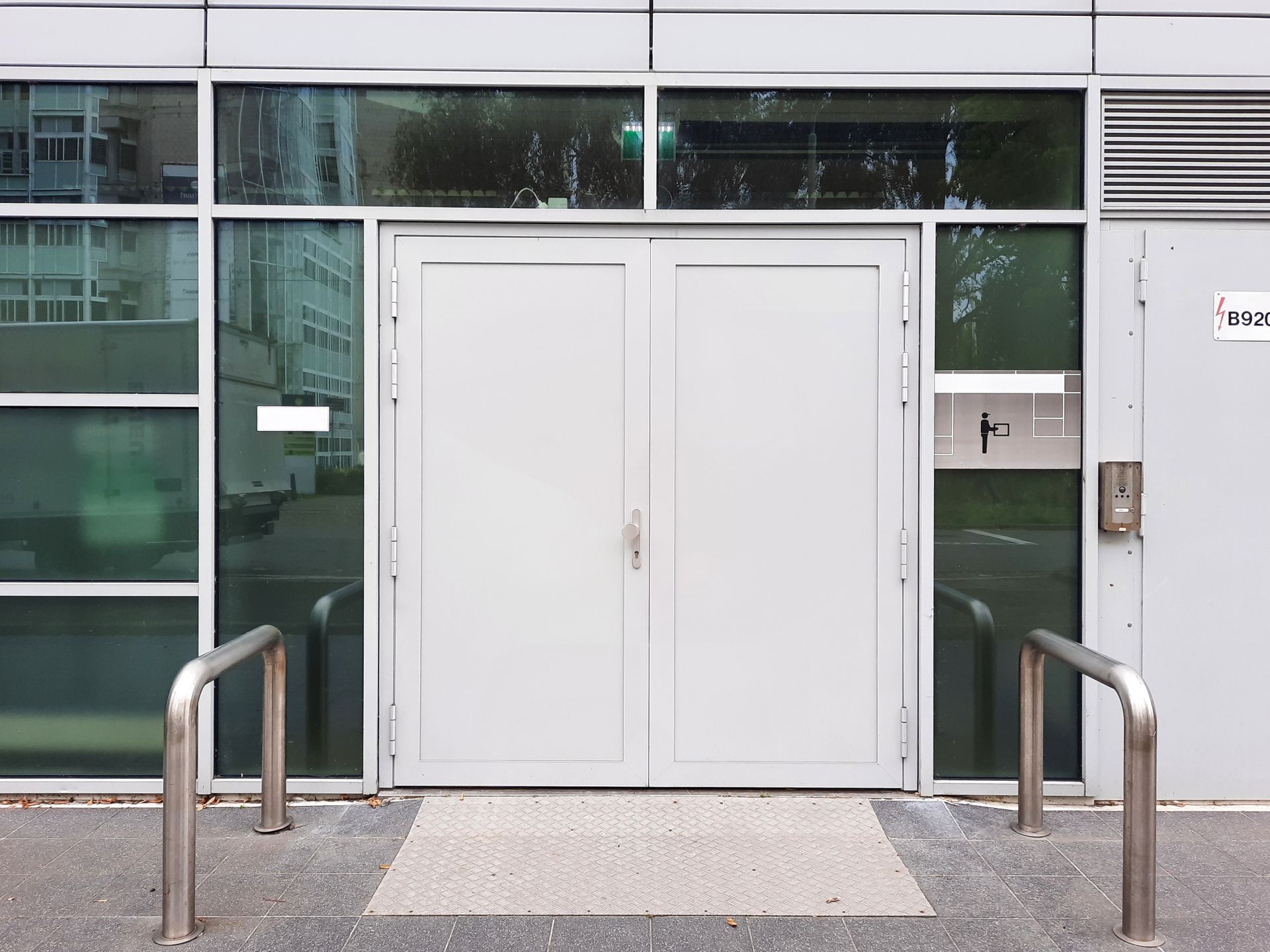
Commercial Glass & Glazing
Aluminum Entrances
Your front entrance is the hardest-working part of any storefront — it opens hundreds of times a day, has to meet ADA requirements, and sets the first impression every customer gets. Nu-Glass & Storefronts designs, installs, and repairs commercial aluminum entrance doors across the Hudson Valley, with owner Rick Powles on every job. We installed the aluminum entrances for Ulta Beauty, Sleep Number, and Francesca's, and handled the entrance system on a full Ford dealership facade remodel.
What We Do
- ✓ Aluminum entrance doors — narrow, medium, and wide stile
- ✓ Automatic operators — swing and sliding, for accessibility and high traffic
- ✓ ADA-compliant openings — clear width, thresholds, and operable hardware
- ✓ Entrance hardware — closers, pivots, panic/exit devices, locks, and electric strikes
- ✓ Finishes — clear and bronze anodized, plus custom architectural finishes
- ✓ Glass infill — tempered and insulated, to match your storefront
Understanding aluminum entrance door stiles
The "stile" is the vertical aluminum frame on each side of the door, and the width changes both how the door looks and how long it holds up under daily use.
Narrow stile doors have slim sightlines — typically 1¾" to 2" wide — and a contemporary, light look. They're popular for boutiques, office lobbies, and high-end retail where the aesthetic matters as much as the function. The tradeoff is that narrow stile is the least robust of the three; it's not the right choice for very high-traffic entries.
Medium stile (typically 3½" to 4") balances appearance and durability. It's the workhorse of commercial entrance doors — appropriate for most restaurant, professional office, and general retail applications. We've installed medium stile entrances on scores of Hudson Valley storefronts and they hold up well.
Wide stile (typically 4½" to 5") is the most durable option and handles the abuse of extremely high-traffic entries: grocery stores, pharmacies, institutional buildings, and any location where the door is being hit hundreds of times a day. The frame is heavier and the hardware options are broader — it accepts a wider range of closers, panic devices, and automatic operators.
We recommend the stile width that fits your actual traffic pattern and look, not the cheapest option that will technically work. A narrow stile door in a high-traffic entry is a service call waiting to happen.
ADA compliance: what it actually requires for a commercial entrance
The Americans with Disabilities Act and New York State building code set specific requirements for commercial entrances, and getting them right on a new installation is far easier than retrofitting them later. Here's what matters:
Clear opening width. The minimum clear opening (door in the open position) is 32 inches, with 36 inches recommended for full accessibility. We size the door and frame to meet this from the start.
Threshold height. The threshold at the bottom of the door cannot exceed ½ inch in height, and beveled thresholds must have a slope no steeper than 1:2. We use low-profile thresholds and set the door to eliminate tripping hazards while still keeping weather out.
Hardware operation. Door hardware must be operable without tight grasping, pinching, or twisting of the wrist. That means lever handles, not knobs, and closers adjusted so the door is light enough to pull open with one hand. We set the closing force and speed on every closer we install — ANSI A156.4 specifies the maximum force for fire doors and ADA-accessible entries.
Door closer timing. An ADA-compliant door must stay open for at least 5 seconds before the closer begins to pull it shut, giving a person using a wheelchair or walker time to clear the opening. We set this correctly at install and it's one of the things we check first when we get a service call on a "slow" or "hard to use" door.
For ongoing hardware repair and service, see our door closures & hardware page.
Automatic door operators: when they make sense
An automatic door operator removes the need to pull the door at all — the door opens when someone approaches or presses an activation pad. They're required in some ADA applications (though the code more often requires a door that's easy to open, not necessarily automatic) and they're a genuine service upgrade in high-traffic, hands-free, or healthcare environments.
Swing operators power a standard hinged door through a full open-and-close cycle. They mount overhead, on the frame or the wall, and tie into a motion sensor or push-to-activate pad. The advantage is that they work with a standard door opening — no track or sliding hardware required.
Sliding operators move a panel laterally on a track — think hospital entrance or grocery store entrance. They require a wider rough opening than a swing door (the panel needs room to slide out of the way) but deliver completely hands-free entry, which makes them the right choice for cart-in retail, healthcare, and food service.
We install, service, and replace automatic operators on commercial entrances across Orange, Ulster, and Dutchess Counties. If your existing operator is failing — slow to open, grinding, or not responding to the sensor — we diagnose and repair or replace it. Often it's a sensor issue or a mechanical component, not the whole system.
Entrance glass: matching your storefront, meeting code
The glass infill in an aluminum entrance door has to satisfy two requirements: it has to look right alongside the rest of the storefront, and it has to meet code for safety glazing in a hazardous location. Building codes (IBC Section 2406 and New York State Building Code) require safety glazing in and adjacent to doors — specifically, any glass within 24 inches of the door edge and within 60 inches of the floor must be tempered, laminated, or another approved safety glazing.
In practice, this means every door lite, sidelite adjacent to the entrance, and transom within that zone gets tempered glass — or, where security or sound is a priority, laminated-tempered glass. We don't substitute standard float glass in those locations; aside from being a code violation, it's a safety hazard and will fail inspection.
For entrance glass on a building with insulated storefront glazing, we typically use insulated tempered units in the door — matching the dual-pane system of the storefront for thermal consistency. See our safety glass page for a full breakdown of tempered vs. laminated and where each belongs.
Repair or replace? Our honest assessment
A worn or misbehaving entrance door usually doesn't need to be replaced — frequently the problem is with the hardware, not the door or the frame. The most common entrance door complaints we get, and what's actually causing them:
Door slams — the closer's closing speed needs adjustment, or the closer is worn out and needs replacing. This is a 30-minute service call in most cases.
Door sags or drags on the floor — the pivots or hinges have let the door drop out of square. We replace the pivots and rehang the door.
Door won't latch — the door and the strike are out of alignment, usually because of pivot wear or frame movement. We realign the strike or adjust the door.
Door is hard to push — the closer is set too heavy, or it needs adjustment for ADA compliance. We reset it.
We only recommend a full door or frame replacement when the door or frame is genuinely beyond service — bent beyond true, corroded through, or too damaged to hold hardware properly. For dedicated hardware repair and service, see our door closures & hardware page. Part of our full commercial glass & glazing services.
Our entrance door work across the Hudson Valley
Over 35 years of installing and servicing commercial entrances in Orange, Ulster, and Dutchess Counties, we've seen every failure mode and most building types. The Ulta Beauty entrance at the Galleria — narrow stile doors with automatic swing operators and matching storefront framing — is a good example of a complete entrance package. The Sleep Number storefront required an entrance that pulled in shoppers while maintaining clean sightlines into the display floor. The Ford dealership facade remodel required us to integrate a full entrance system into a redesigned aluminum facade on an occupied building, working around service hours.
These aren't just references — they're examples of the coordination, field problem-solving, and attention to detail that goes into commercial entrance work when it's done right. Rick Powles is on every one of these jobs, measuring, overseeing the installation, and signing off on the final adjustment. That's not a marketing statement; it's how the business runs. For the full scope of commercial glass work we do, visit our commercial glass & glazing page.
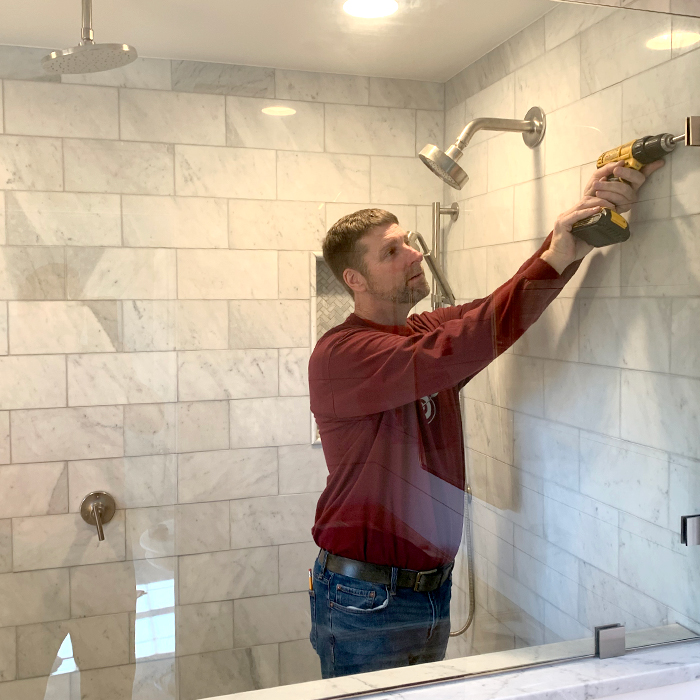
Written & verified by
Rick Powles
Owner & Operator, Nu-Glass & Storefronts, Inc.
Rick Powles has measured, fabricated, and installed commercial glass and glazing systems across the Hudson Valley since 1989. As owner-operator, he is on every job — storefronts, curtain wall, frameless showers, and everything in between.
FAQs
Frequently asked questions
-
What's the difference between narrow, medium, and wide stile doors?
The stile is the vertical aluminum frame on each side of the door. Narrow stile is slim and modern, best for lower-traffic entries. Wide stile is the most durable for high-traffic locations. Medium is the everyday workhorse for most retail and office applications. We match the stile to your actual traffic and aesthetic.
-
Can you make my entrance ADA-compliant?
Yes. We address clear opening width, low threshold height, lever hardware that's easy to operate, and a closer adjusted to the correct opening force and timing — as part of a new install or a retrofit of your existing door.
-
Do you install automatic door operators?
Yes — swing and sliding automatic operators for accessibility and high-traffic entrances. We install new systems and service existing operators that are slow, grinding, or not responding to sensors.
-
Can you repair my existing aluminum door, or only replace it?
Usually we can repair it. Most entrance door problems are hardware — a failing closer, worn pivots, or a misaligned strike. We fix what's actually wrong and only recommend full replacement when the door or frame is beyond repair.
-
How long does an entrance door installation take?
A standard door swap is typically one day on-site once the door and hardware are available. Custom systems and automatic operators have longer lead times for the equipment, but the installation itself is usually one day.
Get Started
Need aluminum entrances?
Call the shop or request a free estimate — we'll measure, quote, and get it done right.