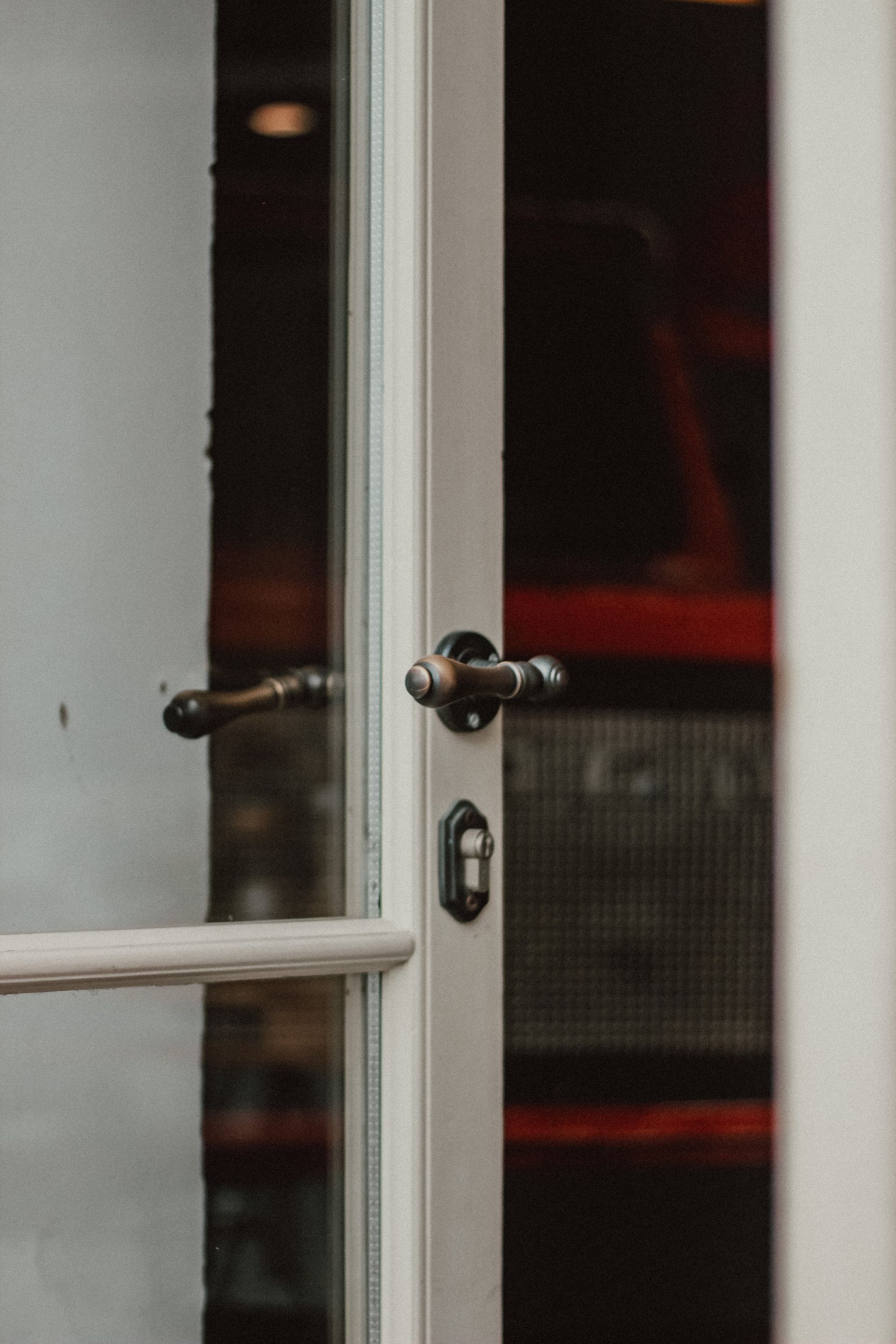
Commercial Glass & Glazing
Door Closures & Hardware
A commercial door that slams, sags, or won't latch is a daily headache — and a security and code problem. Nu-Glass & Storefronts repairs and installs the hardware that keeps commercial entrances working: closers, pivots, panic devices, locks, and more. Family-owned and Newburgh-based since 1989, with owner Rick Powles on every job — door hardware service is one of our most consistent calls across Orange, Ulster, and Dutchess Counties.
What We Do
- ✓ Door closer repair & replacement — surface-mounted, concealed overhead, and floor closers
- ✓ Pivots & continuous (geared) hinges — for sagging or dragging doors
- ✓ Panic & exit devices — crash bars for code-required egress
- ✓ Locks, deadbolts & electric strikes — including access-control tie-ins
- ✓ Patch fittings — top and bottom hardware for frameless glass doors
- ✓ Thresholds, weatherstripping & sweeps — to stop drafts and water
- ✓ ADA hardware — levers and operation that meet accessibility requirements
Common commercial door problems — and what's actually causing them
Most commercial door complaints trace back to a few root causes. After 35 years of servicing doors across the Hudson Valley, we diagnose these quickly:
Door slams or closes too fast. The closer's closing speed is set too fast, or the closer is old and has lost its fluid control — the hydraulic valve that regulates speed has worn. In most cases this is a closer adjustment (a 15-minute service call) or, if the closer body is failing, a closer replacement. A new commercial closer typically runs $150–$350 installed, depending on the closer grade and door size.
Door sags or drags on the floor. The pivots or hinges have worn to the point where the door has dropped out of alignment. Pivots carry the full weight of the door and wear over years of use — high-traffic entries can wear through a pivot set in three to five years. We replace the pivots and rehang the door so it swings freely and latches correctly.
Door won't latch or takes several attempts. The door and the strike are out of alignment — the latch bolt isn't meeting the strike cleanly. Usually caused by pivot wear letting the door drop, or frame movement shifting the strike. We realign the strike or adjust the door to correct the latch engagement.
Door is hard to open — too heavy. The closer is set too heavy, or it wasn't adjusted for the door weight when installed. For ADA compliance, the closing force on a non-fire door has to be 5 lbs or less. We reset the closer to the correct opening force.
Drafts or water at the bottom of the door. Worn weatherstripping or bottom sweep. We replace the seal and adjust the threshold if needed.
Commercial door closers: the three main types and when each is used
Not every commercial door uses the same type of closer. Matching the closer to the door and application is part of what determines how long the hardware lasts and how well it performs.
Surface-mounted closers are the most common type on commercial doors — you've seen them on thousands of office, retail, and institutional entrances. The closer body mounts on the face of the door or the frame, with an arm connecting to the opposing surface. They're visible, relatively economical, and available in a wide range of power ratings for different door sizes and traffic levels. ANSI/BHMA A156.4 grades commercial closers by door width and frequency of use — a correctly graded closer for a high-traffic retail entrance outlasts one that's undersized for the application.
Concealed overhead closers hide inside the door frame or transom — the mechanism is invisible from the face of the door. The result is a cleaner appearance on high-end entries where visible hardware is undesirable. They're more expensive and harder to service than surface-mounted closers, but the aesthetic benefit is real on the right application.
Floor closers (pivot closers) are set into the floor below the door and carry the door on a bottom pivot. They're used on heavy all-glass and frameless doors where a surface-mounted closer would be inappropriate aesthetically or mechanically. Floor closers are the most difficult to replace because accessing them requires pulling up the floor finish, but they're the right hardware for the application they're specified for.
We stock closers from commercial-grade manufacturers and carry the most common grades for the door types we service in the region. For full entrance door replacement, see our aluminum entrances page.
Panic devices, exit hardware, and life-safety code compliance
Panic devices — more formally called "panic exit devices" or "exit devices" — are the crash bars you see on emergency exit doors. They're required by building code on specific doors in commercial occupancies, and failing to have them or allowing them to fall into disrepair is a code violation and a life-safety hazard.
The International Building Code and New York State Building Code require panic hardware on exit doors in the following occupancy types and door configurations:
- Assembly occupancies (restaurants, theaters, places of worship) with an occupant load over 50 — all exit doors.
- Educational occupancies — exterior exit doors.
- High-hazard occupancies — all exit doors.
- Other occupancy types where a door serves more than 50 people on the egress side.
The hardware itself operates by pushing a bar or paddle horizontally — no twisting, grasping, or knowledge of the building required. That's the life-safety point: under emergency conditions, any occupant can open the door by pushing against it.
Panic devices fail in predictable ways: the bar stops latching the door (the mechanism has worn or corroded), the bar sags (the mounting has loosened), or the device isn't releasing cleanly (the latch mechanism needs adjustment or replacement). We service and replace panic devices across all the common commercial hardware lines. We also advise on whether a door that doesn't currently have panic hardware is required to have it based on the occupancy and occupant load.
Electric strikes and access control: integrating hardware with building systems
Electric strikes replace the standard mechanical strike in a door frame with an electrically controlled version — a solenoid releases the latch keeper when a signal is received, allowing the door to be pulled open without a key. They're the interface between mechanical door hardware and electronic access control systems (key cards, fobs, keypads, remote release buttons), and they're one of the most common hardware upgrades we install on commercial entrances in the Hudson Valley.
Fail-safe vs. fail-secure. This is the most important specification for an electric strike. Fail-safe strikes release (unlock) when power is lost — used on egress doors where people need to be able to exit during a power failure. Fail-secure strikes remain locked when power is lost — used on entry doors where security is maintained even during an outage. Selecting the wrong configuration creates either a security or a life-safety problem. We confirm the correct specification before installation.
Integration with access control systems. We install the mechanical hardware — the electric strike, the door prep, and the wiring conduit — but the access control system itself (software, cards, readers, control panels) is typically scoped by a low-voltage contractor. We coordinate with access control contractors regularly and understand what the door hardware needs to provide for the electronic system to function correctly. If you're adding access control to a door that currently has a standard lock, we assess whether the existing door and frame can accept the electric strike or if the hardware needs upgrading.
For lock and latch hardware outside of electronic access control, we also install and replace standard commercial mortise locks, cylindrical locks, deadbolts, and multi-point locking systems on all commercial door types. For related hardware concerns, see our office glass partitions page for partition door hardware integration.
Frameless glass door hardware: patch fittings and pivot systems
Frameless glass doors — the all-glass swing doors you see in modern office lobbies and high-end retail — don't use a conventional hinge set. Instead, they use "patch fittings": precision aluminum or stainless steel hardware bolted directly through holes drilled in the glass before it was tempered. The top fitting connects the door to the frame or transom; the bottom fitting contains the pivot and carries the weight of the door.
Patch fittings are elegant when they're working correctly and problematic when they're not. The glass itself can't be modified — any drilled holes have to be in the right location from the time the glass is tempered, and a glass panel with holes in the wrong location has to be replaced entirely. The hardware itself can be serviced and replaced without replacing the glass, as long as the holes are correctly positioned.
Common frameless glass door hardware calls we get:
- Door has dropped out of level. The bottom pivot has worn or the floor spring mechanism has degraded. We adjust or replace the bottom patch fitting to restore level.
- Door isn't latching. The top patch fitting connection or the latch hardware at the meeting edge has shifted. We adjust the hardware to restore the latch engagement.
- Glass cracked at the patch fitting hole. This occasionally happens when a door is impacted while open — the stress concentration at the drilled hole allows a crack to propagate. This requires a full glass replacement, which we fabricate and install to the same dimensions and hardware hole pattern as the original.
For the full entrance door context, see our aluminum entrances page. Part of our full commercial glass & glazing services.
Hardware lifespan, maintenance, and when to replace vs. repair
Commercial door hardware is designed to last, but it's not maintenance-free. ANSI/BHMA grades commercial hardware by cycle rating — the number of open-and-close operations the hardware is designed to withstand before it reaches the end of its reliable service life. A Grade 1 commercial closer is rated for 2 million cycles; a Grade 2 for 750,000 cycles. A high-traffic retail entrance that opens 500 times a day goes through 500,000 cycles in about three years — which means Grade 1 hardware is the only appropriate specification for that door.
In practice, hardware that's correctly specified for the traffic load of the door and properly installed will typically last 10–20 years before it needs replacement. Hardware that's undersized for the traffic — a residential-grade closer on a commercial entrance, for example — may fail in 18 months.
Our diagnostic approach: when we get a service call on a door, we first determine whether the problem is adjustment (often fixable in 30 minutes without parts), repair (a single component needs replacing), or replacement (the hardware body itself has failed and is beyond adjustment). We'll tell you honestly which situation you're in and quote accordingly. We don't replace hardware that still has service life in it, and we don't try to adjust hardware that's genuinely worn out. After 35 years of commercial hardware service in the Hudson Valley, we know the difference.
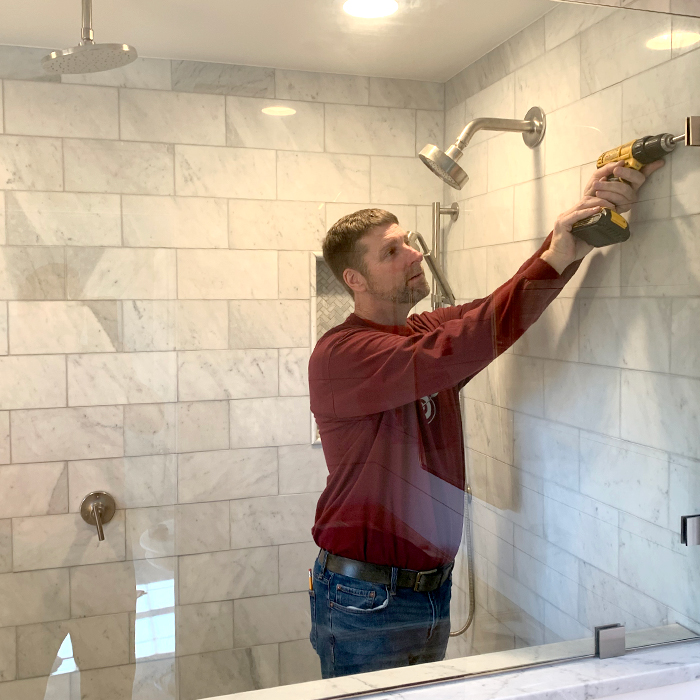
Written & verified by
Rick Powles
Owner & Operator, Nu-Glass & Storefronts, Inc.
Rick Powles has measured, fabricated, and installed commercial glass and glazing systems across the Hudson Valley since 1989. As owner-operator, he is on every job — storefronts, curtain wall, frameless showers, and everything in between.
FAQs
Frequently asked questions
-
My commercial door slams or won't close properly — can you fix it?
Yes. That's almost always the door closer — it needs adjustment, the hydraulic fluid has leaked, or it needs replacement. We set the closing speed and latch correctly or swap the closer if it's worn out. A service call usually resolves this the same day.
-
My door sags or drags on the floor — what causes that?
Usually worn pivots or hinges that have let the door drop out of alignment. We replace the pivots and rehang the door so it swings and latches correctly.
-
Do you install panic bars and exit devices?
Yes. Panic exit devices are required by code on many commercial egress doors, and we install and repair them to keep your exits compliant. We also advise on whether your specific doors require panic hardware based on occupancy type and occupant load.
-
Can you make my door hardware ADA-compliant?
Yes — lever handles that operate without tight grasping or twisting, and closer adjustments to keep the opening force under 5 lbs for non-fire doors. We address all the hardware elements for ADA compliance on new installs and retrofits.
-
Do you repair frameless glass door hardware?
Yes. We service patch fittings — the top and bottom hardware on frameless glass doors — along with pivots, closers, and locks. If the glass itself is cracked at a patch fitting hole, we fabricate and install a replacement panel to the same dimensions and hole pattern.
Get Started
Need door closures & hardware?
Call the shop or request a free estimate — we'll measure, quote, and get it done right.