Commercial Glass & Glazing
Tempered & Laminated Safety Glass
Wherever glass meets people — doors, low windows, railings, wet areas — building code requires safety glazing, and using the wrong glass there isn't just risky, it fails inspection. Nu-Glass & Storefronts supplies and installs tempered and laminated safety glass cut to size for Hudson Valley businesses. Every storefront we build uses tempered safety glass at the doors and adjacent sidelites because the code requires it, and because it's the right glass for those locations. We know exactly where each type belongs and why.
What We Do
- ✓ Tempered glass cut to size — doors, sidelites, railings, partitions, shelves, and tabletops
- ✓ Laminated safety & security glass — for overhead glazing, sound control, and security
- ✓ Laminated-tempered units — combining both safety properties in one panel
- ✓ Code-compliant safety glazing in hazardous locations, specified correctly
- ✓ Replacement of broken tempered and laminated panels — measured and fabricated to spec
- ✓ Safety glazing certification identification — CPSC 16 CFR 1201 compliant product
Tempered vs. laminated: what's the difference and when does each apply?
Both are classified as "safety glass," but they work differently and are right for different applications. Understanding the distinction prevents the wrong glass going into the wrong location — a problem we see on renovation projects all the time.
Tempered glass is standard float glass that's been heated to roughly 1,150°F and then rapidly air-quenched. This creates a compressive stress pattern throughout the glass that makes it four to five times stronger than untempered glass of the same thickness. More importantly for safety, when tempered glass does break, it shatters into small, relatively blunt granules rather than large sharp shards. That's the property that makes it the code-required glazing for doors, low windows, and most storefront applications. The relevant standard is ANSI Z97.1, and all safety glass we supply carries the required CPSC 16 CFR 1201 certification marking etched into a corner of the panel.
Laminated glass is two or more glass lites permanently bonded over a clear PVB (polyvinyl butyral) or ionoplast interlayer. When it breaks, the interlayer holds the pieces in place in the opening — the glass crazes and cracks, but it doesn't fall out or shatter into the space below. That's why laminated glass is specified for overhead glazing, skylights, and any application where falling glass is a hazard. It also provides security benefits (a laminated panel is harder to breach quickly), sound dampening, and UV filtration.
We specify the right type for each location and often both appear on the same project — tempered in the storefront door panels, laminated in the overhead transom above the entrance.
Where building code requires safety glass: the hazardous locations
The International Building Code (IBC Section 2406) and New York State Building Code define specific "hazardous locations" where safety glazing is required. On every commercial project we work on, we identify these locations during the design and measurement phase so the right glass goes in from the start.
In and adjacent to doors. Any glazing in a door, in a panel adjacent to a door that is within 24 inches of the door edge and 60 inches of the floor, and any transom within the door assembly is a hazardous location. Tempered glass is required here on virtually every commercial installation.
Large low panes. Fixed or operable glazing panels whose area exceeds 9 square feet, with a bottom edge lower than 18 inches above the finished floor and a top edge more than 36 inches above the floor, are considered hazardous. This commonly applies to large storefront display windows close to grade.
Railings and guards. Glass used as a railing infill or structural guard panel must be laminated glass — tempered alone isn't acceptable in this application because the glass has to stay in place on impact, not shatter out of the railing assembly.
Wet areas. Glazing in and adjacent to showers, bathtubs, pools, and hot tubs is a hazardous location. Tempered or laminated glass is required in shower enclosures and around pool glazing.
We make sure the right safety glass goes in every hazardous location, so your project passes inspection the first time.
How tempered glass is made — and why it can't be cut or drilled after
The tempering process is what gives tempered glass its strength, and it's also what limits how the glass can be fabricated. Here's why this matters in practice:
Before tempering, the glass is cut, drilled, edged, and notched to its final dimensions. It then goes through a tempering furnace — heated to approximately 1,150°F across the entire surface — and then through a blower section that rapidly air-quenches the surfaces while the core is still hot. The surface goes into compression and the core goes into tension, creating the stress pattern that makes the glass strong and determines how it breaks.
Once tempered, the glass cannot be cut, drilled, ground, or modified in any way. Any attempt to cut or drill tempered glass will cause it to shatter immediately — the surface compression is disrupted and the stored stress releases all at once. That's why we need accurate dimensions before we order: there's no adjustment after the glass is tempered. For a standard size replacement on a commercial storefront, this means precise field measurement before we call in the order. For a custom shape or a door with a specialized cutout, the fabrication details have to be worked out before tempering.
This is also why you should be skeptical of any glass supplier who offers to "cut tempered glass to size" for a nominal fee — it can't be done to a properly tempered panel. What they're selling is heat-strengthened glass (stronger than standard, but not meeting the full tempered standard) or simply non-tempered glass labeled incorrectly.
Laminated glass for security, sound, and overhead applications
Beyond the basic safety function, laminated glass delivers performance properties that make it the right choice — and sometimes the only compliant choice — in several commercial situations.
Security. A laminated panel, even when broken, stays in the opening. Smash-and-grab burglaries rely on a single impact shattering the glass and clearing the opening in seconds. With laminated glass, the glass cracks but the interlayer holds it together — forcing an attacker to work through the panel repeatedly, which takes time and makes noise. For jewelry stores, dispensaries, and pharmacies facing this risk, laminated glass in the display windows and entrance sidelites is a meaningful deterrent. For higher security levels, we also handle bullet-resistant glazing, which uses substantially thicker laminated systems rated to specific UL levels.
Sound control. The PVB interlayer in laminated glass is viscoelastic — it damps sound vibration. A standard laminated glass unit (two lites of 1/4" glass over PVB) provides noticeably better sound isolation than a same-thickness monolithic tempered panel. For restaurants, offices adjacent to busy streets, or any space where exterior noise intrusion is a problem, laminated glass in the storefront or window glazing is an effective part of the sound control strategy.
Overhead glazing. Building codes require laminated glass in overhead applications — skylights, sloped glazing, glass canopies — because a falling panel of broken glass is a life-safety hazard. Tempered glass, even though it breaks into small pieces, still allows those pieces to fall. Laminated glass stays in the opening. We handle overhead glazing installations and replacements as part of our commercial work.
Common safety glass replacements we handle
The most frequent safety glass calls we get on the commercial side fall into a few patterns, and all of them start the same way: we come out, measure the existing panel, identify the glass type from the certification mark (or, if it's unmarked, from the way it breaks or is specified), and order a replacement to spec.
Broken storefront door lite. A door panel that's been impacted — from a collision, a break-in attempt, or a thermal crack — is one of the most common calls. We board it up if necessary, measure, and replace with the same type: typically ¼" or 5/16" tempered in a standard storefront door, insulated tempered for an energy-efficient door.
Failed transom or sidelite. Glass adjacent to an entrance that's cracked, crazed, or been impacted. We replace it with the appropriate safety glazing and, on older buildings, often upgrade to insulated glass if the existing panel was single-pane.
Broken railing infill. A laminated railing panel that's been impacted. We fabricate a replacement to the same dimensions and interlayer specification.
For any safety glass replacement, the certification marking on the replacement panel is important for passing inspection. All glass we supply carries the required CPSC 16 CFR 1201 marking. Part of our full commercial glass & glazing services — see also insulated & plate glass for energy-efficient glass options.
Safety glass and the building inspector
In New York State, commercial work requiring a building permit gets a final inspection, and glazing is part of what the inspector reviews. The inspector looks for the certification mark — typically etched into a corner of the panel — that confirms the glass meets the required standard. Glass that doesn't carry the mark, or that's installed in a hazardous location without the correct designation, fails inspection.
We never substitute standard glass in a location that requires safety glazing. It's not just a code issue — it's a liability issue for the building owner. When we replace safety glass, the replacement carries the correct CPSC 16 CFR 1201 mark. When we're advising on a renovation or buildout, we identify all the hazardous locations up front so there are no surprises at inspection. That's part of what 35 years of commercial glazing experience in this region looks like — we know what the inspectors in Orange, Ulster, and Dutchess Counties look for, and we meet the standard on the first visit.
Written & verified by
Rick Powles
Owner & Operator, Nu-Glass & Storefronts, Inc.
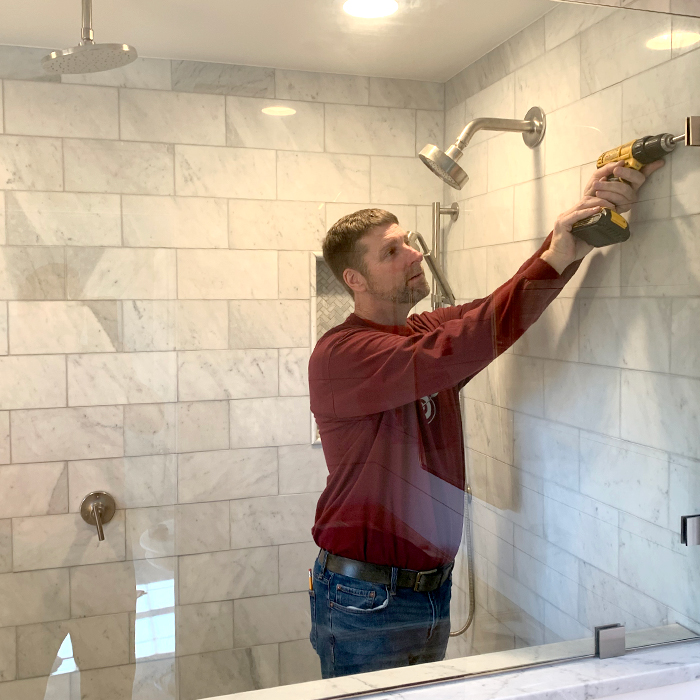
Rick Powles has measured, fabricated, and installed commercial glass and glazing systems across the Hudson Valley since 1989. As owner-operator, he is on every job — storefronts, curtain wall, frameless showers, and everything in between.
FAQs
Frequently asked questions
-
What's the difference between tempered and laminated glass?
Tempered glass is heat-strengthened and breaks into small, blunt granules — required in doors and most hazardous locations. Laminated glass has a plastic interlayer that holds broken pieces in place — required for railings, overhead glazing, and security applications. Building code determines where each type goes.
-
When does code require safety glass?
Generally in and near doors (within 24 inches of the door edge), large low panes with a bottom edge under 18 inches off the floor, glass in railings and guards, and wet areas like showers. We identify all hazardous locations before any glass is ordered.
-
Can tempered glass be cut to size after it's made?
No. Tempered glass must be cut, drilled, and edged before it's heat-treated. After tempering, any modification causes it to shatter immediately. Accurate field measurement before ordering is essential — there's no adjustment after the fact.
-
Is laminated glass the same as bullet-resistant glass?
No. Standard laminated glass improves safety and holds together when broken, but it isn't rated to stop bullets. Bullet-resistant glazing uses much thicker laminated systems rated to specific UL 752 levels. See our bullet-resistant glass page for the full breakdown.
-
Can you replace a single broken tempered or laminated panel?
Yes. We measure, identify the glass specification from the original installation (or advise on the appropriate spec), fabricate the replacement to size, and install it — matching thickness and coating where needed.
Get Started
Need tempered & laminated safety glass?
Call the shop or request a free estimate — we'll measure, quote, and get it done right.